
By Gaby Dufresne-Cyr, CBT-FLE
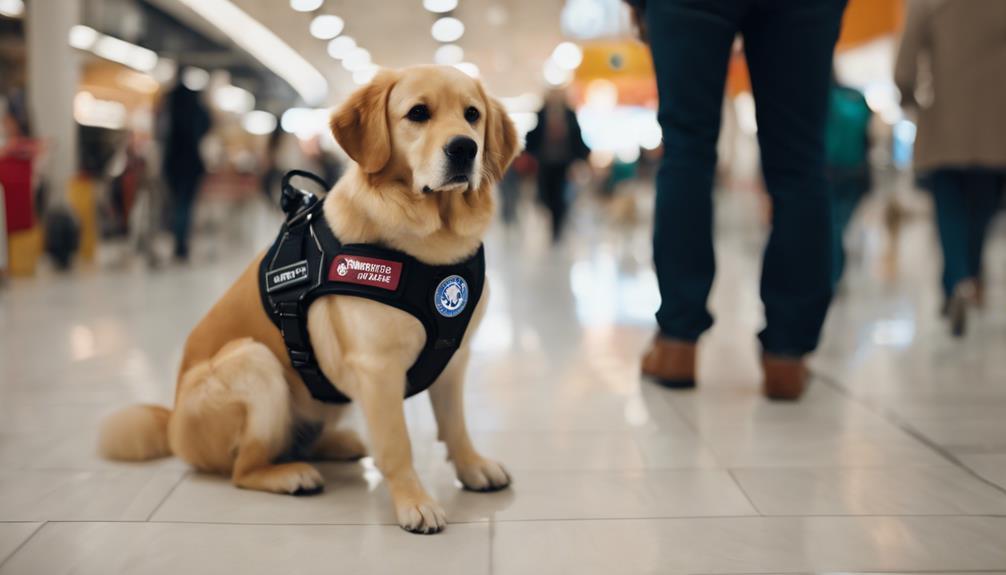
When most people think about puppy socialization, they picture play. Groups of puppies tumbling over one another, burning energy, getting used to the world. It looks productive, and it feels right.
For a future service dog, or any dog expected to navigate the human world with stability, this version of socialization often misses the point entirely. Socialization is about analyzing, interpreting, and problem-solving novel stimuli in unknown environments.
Through the lens of Social Cognitive Animal Training (SCAT), what matters is how the dog processes the experience, understands and remembers it. Forcing a puppy to meet twenty dogs is not learning how to socialize. Teaching a puppy to remain calm, to observe, and to regulate its own emotional response is preparing a dog to face life.
Social Cognitive Animal Training
SCAT invites us to look at socialization through three interacting forces: the social, the cognitive, and the environmental.
Socially, the puppy is always learning from someone: dogs, people, cats, fire trucks, etc. Dogs observe posture, breathing, and reactions; we call this social referencing. If you contract your muscles, tighten the leash, sharpen your attention, anticipate conflict, your puppy absorbs that information instantly. In that moment, you are modelling behaviour.
Cognitively, the puppy is assigning meaning. Is that approaching dog exciting? Threatening? Irrelevant? Dog shape, moment by moment, these meanings through repeated experiences. When a puppy learns that seeing another dog leads to arousal and interaction, it expects it. When it learns that seeing another dog leads to calm observation and quiet reinforcement, a different pattern forms.
Environmentally, context determines everything. Distance, movement, noise, and unpredictability either support regulation or push the puppy beyond its emotional threshold. Socialization is successful because it happens under the right conditions.
Socialization Is Not Overexposure
Unstructured dog park exposure can create long-term challenges. It teaches intensity before stability. It rewards impulsivity over awareness. In contrast, structured socialization focuses on neutrality.
When a puppy sees another dog and you remain grounded, the leash stays loose. Nothing dramatic happens, and the puppy glances back at you because the voluntary check-in, the almighty feedback loop only dogs possess, is where learning lives.
That is the foundation of service dog training and non-service dogs. A dog that has met everything often learns avoidance, but a dog that has learned how to exist within it develops curiosity, problem-solving, and decision-making.
Professional trainers and clients should guide puppies through controlled environments where they encourage observation, reinforce regulation, and offer layered experiences with intention and feedback because the goal is not a social dog; it is a stable one.