
Randi Belfer, CDT
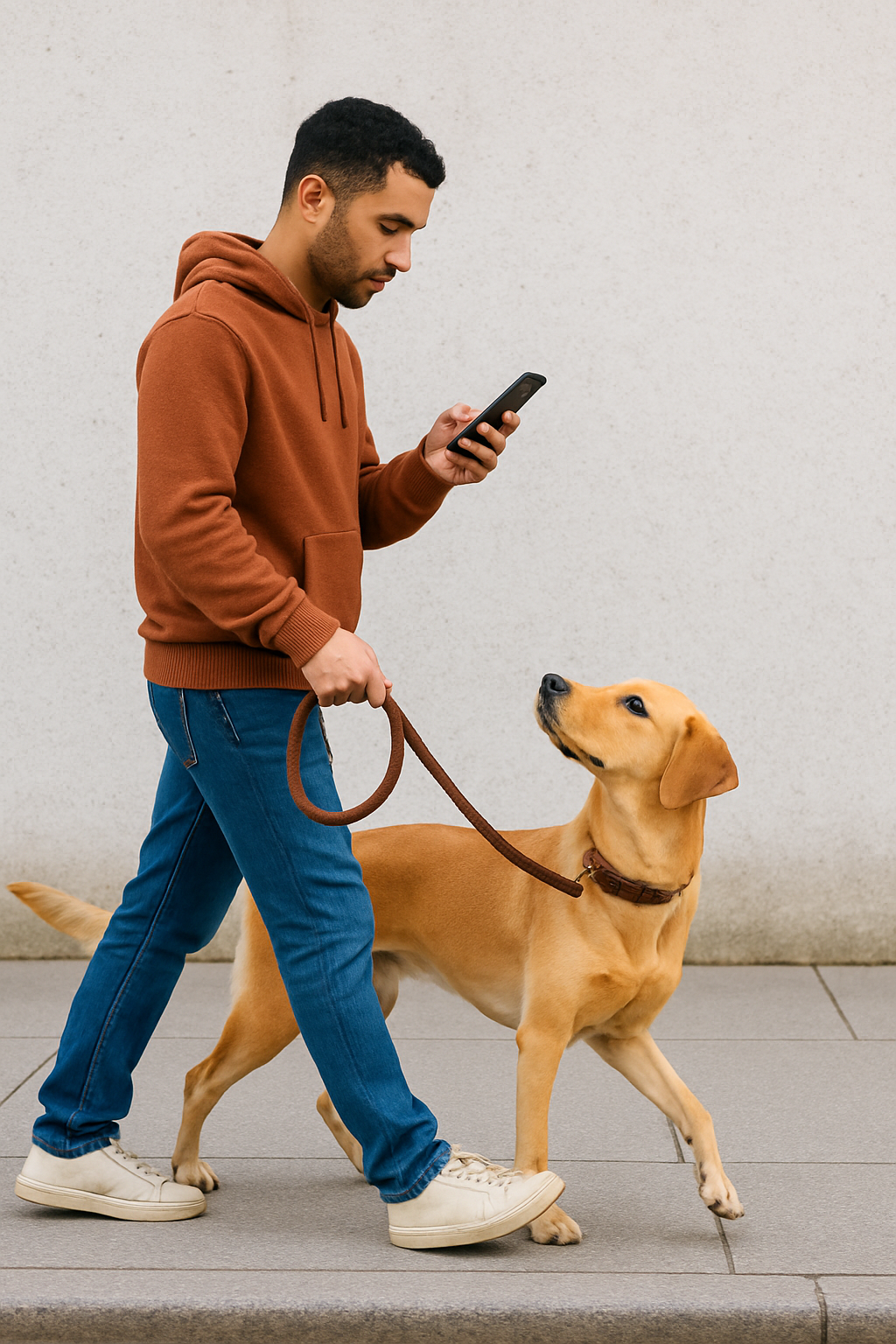
The relationship between humans and dogs has always been built on presence, shared moments, eye contact, touch, and mutual awareness. Yet in today’s world, that presence is fading. Everywhere you look, people are walking their dogs with their heads bent over glowing screens, thumbs scrolling while their dog wanders at the end of the leash, waiting for connection that never comes.
This growing cell phone addiction has created an invisible wall between dogs and their people. What was once a partnership rooted in trust and communication has become a distracted coexistence. Dogs thrive on social connection. They learn through observation, emotional feedback, and the subtle cues we give off with our body language and tone. When our attention is consumed by a phone, those vital signals disappear.
From the perspective of social cognitive learning theory, this disconnect is profound. Dogs, like humans, learn through imitation, social referencing, and emotional attunement. They watch us constantly, reading our expressions, gestures, and reactions to understand what’s safe, what’s exciting, and what’s expected. They model their behaviour on ours, which is a process that relies entirely on focused presence.
When we’re looking at our phones, we’re no longer modelling calm confidence, joy, or curiosity. Instead, our body language becomes closed and unpredictable. Our dogs may sense frustration, impatience, or disinterest. Over time, this can lead to confusion, anxiety, and a breakdown in communication. A dog that once looked to their person for guidance may begin to self-direct or disengage entirely.
Human presence is not optional in a healthy dog–person bond. It’s the foundation. Every look, every shared pause, every moment of acknowledgment reinforces trust and attachment. Dogs don’t just want to be near us; they need to feel seen by us. When that eye contact is replaced by a phone screen, they lose a critical feedback loop that shapes how they understand the world.
Beyond training, presence is love in action. It tells a dog, you matter to me. The more distracted we become, the more that message fades. In our attempts to stay connected online, we’ve become disconnected from the companions right beside us, waiting patiently for our attention, our voice, our smile.
If we want to repair this bond, it begins with something simple: putting the phone away. Feel the leash in your hand, watch your dog’s body language, share a look, a laugh, a moment. That’s where learning happens. That’s where the bond lives.
Because to a dog, our presence is the most powerful reward of all.